Showing posts with label bees. Show all posts

Tuesday, April 24, 2012

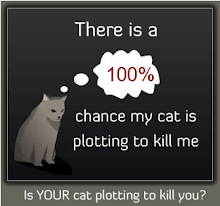
Palate Cleanser #178


Image credit: Danis51


I mean, how could I be expected to pass this one up? It came in my Pixdaus Newsletter email.


Use Feedburner to subscribe to Bright Nepenthe and receive consolidated posts once a day by email.
Enter your email address:

You will receive a subscription verification email to which you must reply. Thanks for subscribing!
© Bright Nepenthe, 2012

Tuesday, October 12, 2010

US Army and UM-Missoula Team Gains Colony Collapse Disorder Insights


So y'all remember how much I love bees, right? (Yeah, it's weird since I'm allergic to them...) and surely you remember all about Colony Collapse Disorder and how necessary bees are to our production of foods in this country? Bees have been having a rough time in the US since 2004, when CCD was first observed. Recently, the Department of Homeland Security's Army research lab, Edgewood Chemical Biological Center, in Maryland and an academic bee-study group at University of Montana have collaborated on research into CCD, the bizarre syndrome which causes bees to become (or so it seems) disoriented and to flee their hives permanently. The NY Times had a nice piece on their research.

Necropsy of bee cadavers has proven a complex business. Bees from apiaries fly in all directions and die, usually alone, when suffering from CCD. Even collection of bees to necropsy has been challenging. Challenging, but fruitful. 

The researchers, who have published their preliminary findings on PloSOne, found that to a worker, every bee cadaver recovered from a CCD'd colony was co-infected with an Iridovirus, an type of virus first noted in Asian Honeybees, that generally infects invertebrate species along with Nosema ceranae, a unicellular parasite that infests bees. Their studies show that co-infection appears to substantially weaken bees. Control bee species in Australia and the Montana Bee lab's apiary indicated that healthy bees were not co-infected with these contagions.

From study co-author Roger Cramer's NPR interview, on All Things Considered, we have the firm statement though that it's "not even close" to being the only answer to CCD. The short piece on CCD gives measure to the frightening rapidity with which bees can up and disappear.

"Pennsylvania beekeeper Dave Hackenberg recalls the experience from 2004 of checking on a hive one morning after noticing a loss of bees. He estimates there were several thousand in the hive.
"But by 1 or 2 o'clock in the afternoon, nobody was home," Hackenberg says. "They just totally disappeared."


Ultimately, the real concern is that no one knows why bees are getting so sick. Many of the diseases found in CCD bees have been known for some time. The suspected culprit? Pesticides. Sprayed on pollen-bearing crops that are dependent upon bees.

If you want to encourage honeybees in your yard, don't spray unless you absolutely have to. And check out Penn States' Pollinator Friendly Garden series.

How much of what you eat is pollinated by bees? Well if you're a fruit and vegetable eater like me, you'd be stunned. But even if you're not, what do think all those cattle, sheep and other livestock are eating? Is some of what they eat pollinated by bees? Hmmm. Maybe you should check that out. ;)


National Park Service


© Bright Nepenthe, 2010

Sunday, June 13, 2010

Moments of Magic and Solitary Bees, Part 1


The Secret Garden by MACHADOANA


When I was a child some of my most magical moments were had in a backyard garden. Back in the days when the climate was not as harsh (and for those of you who don't think our climate is harsher, all I can say is ask a gardener and get an earful) we used to grow roses and cornflowers and bee balm here in South Florida. While I ought to own up to the fact that some of my least magical moments were had in a garden (weeding has to be one of my least favorite things ever and it's one of the best reasons to have children and the best alternative to corporal punishment of a child you didn't hear that from me) I have magical memories of our garden and bees. Which is rather ironic because I'm actually allergic to bees. (Thelma Lee is reading this and wondering what I'm not allergic to and GlamKitty is reading this and thinking I better quit it with the parentheticals and my mother will read this and wonder why I didn't mention the Weed Fairy, who I am sure follows behind "weeding me" and drops little weeds behind my back to taunt me when I turn around to look back over my weeded beds.)

My childhood introduction to solitary bees looked much like this:
(Image credit: Christine Farmer and you have to check out her blog!)

Those are old-fashioned roses which don't do very well in South Florida, where we are so very hot and humid and have no real freeze that lasts in the winter. We just grew the regular floribunda varieties but the blooms aren't really the point at all. Look at those leaves! At the neat and precise little circles cut out of them. As a very vocal and curious nine year old I knew two things. If I couldn't be Elizabeth I (hard because she was dead) and I couldn't be Mad Laurie from Thomasina (I was told I was Irish and not Scottish and that if I brought home one more pet that I was getting in serious trouble) then I wanted to be Mary Lennox in her Secret Garden. The second thing was that there was something messing with our (my) roses! 

My mother really encouraged scientific me. She told me to observe and figure it out. Being nine, I put on my hat, moved my lounge chair over near the rose beds, sipped grape Koolaid and promptly got distracted that hot summer afternoon. But eventually, one day while helping to deadhead (I was very proud when I was finally allowed to deadhead) I saw something rather amazing. What I saw was very much like this:

Leafcutter bee snipping a piece from a rose leaf
(Image credit: Shirley Woods)

My mystery was solved! The perfect little circles were from Leafcutter bees and after I pulled out an encyclopedia and read the small amount of information about them, I decided that they were allowed to take bits of leaf because they used them to build their nests.

Leafcutter bees are among the solitary bees. Solitary bees are a different species of bee from the common Honeybee. They do not make honey or beeswax and most importantly they are not susceptible to Varroa mites, a very serious threat to Honeybees. Solitary bees are very important pollinators. In fact Orchard Mason bees are solitary and got their name precisely because they are orchard pollinators. Solitary bees are a crucial component of fruit production in the US, Canada and Japan. They rely on building nests rather than hives and they pack their nests with things like plant debris and pieces of leaves.

Orchard Mason Bee on an Apple Blossom
Red58bill, Wikimedia Commons

If you live in an area with Orchard Mason bees or Leafcutter bees, you can provide them with a home by offering structures packed with little tubes. Gardner's Supply has a very pretty one made of bamboo, but you can make your own, too. Christine Farmer's solitary bee page is a revelation and her artwork is simply exquisite. You'd probably be doing a whole lot better with your Sunday if you quit reading my blog and went over to Christine's pages to check out her garden's Leafcutter bee housing and her gallery of beautiful drawings.

 
      Mason Bee House, Gardener's Supply                         Nesting Tubes, Christine Farmer


In developing this post, I found this delightful video, Leafcutter Bees of Hell's Kitchen, by Helen B. Kennedy of NYC, of Leafcutter bees collecting lilac leaves for nesting. I hope that Helen knows how valuable and endangered bees are becoming. Let's hope those solitary Leafcutters continue to show up to enjoy her lilacs!


I'll have a more facts-based post on solitary bees later this week. It was Sunday after all, and I wanted to write something relaxing, filled with beauty and to distract from all the... all.

Until then, enjoy your Sunday and remember, even in Hell's Kitchen you can be Bee friendly.... Encourage your local bees! If you can have happy bees in Manhattan, you can wherever you are, too!


Karen Strickler
www.pollinatorparadise.com

© Bright Nepenthe, 2010

Thursday, June 10, 2010

Odds and Ends from Beloved Readers

First up this morning is a link for the film "What is Organic about Organic?" which I received earlier from La comtesse révisée. Cette comtesse is keeping her eyes wide open for treasures and found the trailer for the film over at Feministing. (Les Comtesses are very feminist in their philosophy, 'tis true.) This film looks like a must see and I want to see if I can put together a group of interested people for a screening here where I live. Maybe Le Chef son will attend. C'est bien! It definitely looks like a film all of us should see. Merci ma chère!!


And as mentioned in one of my posts a while back, oil-soaked birds do not fare well even after they have been meticulously cleaned. The damage seems to be irreparable from the moment they have been in contact with the oil. Jane found this article in today's NY Times quoting studies from UC Davis that show that not only do oiled birds do not recover well (less than ten percent survive), they do not breed if they survive. They are, sadly, lost...

Dying Shore Bird (Image credit: Associated Press)

Some believe that the best efforts are to be made remediated oil damaged habitats. Which is exactly what Jen was doing. It is still just such a heartbreaking situation. Perhaps euthanasia is better. Personally, I can't envision not attempting to save an oiled bird. But it's a hard situation. 


And finally, on a somewhat more promising note, Thelma Lee found this excellent resource for those interested in helping bees and our environment. The Great Sunflower Project is operated by San Francisco State University. They invite you to join the hunt for bees, and to plant for bees. You can join the 50,000 participants counting urban and suburban garden bees for The Great Sunflower Project. Everything you need to participate is right there on their link. Being bee friendly (and here) is important to our agriculture and environment. Even solitary bees, which I'm working up a post on, are important. Without bees fertilizing our crops, where will we bee, um I mean, be? You can grow sunflowers and help encourages bees then count the number of bees in your garden. Some gardens didn't have a single bee in their fifteen minute surveys. That's a very bad thing. Help measure how much work your community might need to do to encourage and help sustain the bee population. Plant the seeds and count bees!


Photograph by Jozsef Szentpeteri for National Geographic


Edited to add:

Readers interested in contributing to bird rescue organizations and the reasons why there should still be hope are directed to Uzza's comprehensive post:


Thursday, June 3, 2010

The Buzz in the Bay Area

A honeybee enjoys verbascum (Image credit: Annie's Annuals)

Well, friends in Sonoma County have alerted me to the fact that Annie's Annuals in the East Bay Area is hosting a bee-friendly lecture by Diana Sylvestre of the Yellow Dot Project this Saturday. Yellow Dot is a project of the Sonoma County Beekeepers Association which helps identify bee-friendly plants in nurseries.

Since my mother pretty much lives and breathes Annie's Annuals, I can't miss the chance to mention how cool I think it is that they are encouraging homeowners to have bee-friendly plants and to consider keeping bees.

Oh, and I just wanted to say thank you to my very kind friend, who found this picture of the dahlia that I can't grow, about which I was ranting about only last month, with a bee on it. It's just the perfect marriage of good and evil.

Dahlia imperialis with bee. It wouldn't really look good in my garden, anyway. Right?

Saturday, May 15, 2010

Bee Friendly, Part Two

(Photo credit: CarolinaBees.com)


1. Become a beekeeper

Beekeeping is a most enjoyable, fascinating and interesting hobby – and you get to eat your own honey too. Every year local beekeeping associations run courses to help new people to take up beekeeping and even help them find the equipment they need and a colony of bees. Training programmes continue to allow enthusiasts to become Master Beekeepers. For information on courses visit the British Beekeepers' Association (BBKA) website or the US Beekeeping Associattion.

2. Help to protect swarms

Swarming is a natural process when colonies of honeybees can increase their numbers. If you see a swarm contact the local authority or the police who will contact a local beekeeper who will collect the swarm and take it away. Honeybees in a swarm are usually very gentle and present very little danger. They can be made aggressive if disturbed or sprayed with water. Just leave them alone and wait for a competent beekeeper to arrive.

3. Plant your garden with bee friendly plants

In areas of the country where there are few agricultural crops, honeybees rely upon garden flowers to ensure they have a diverse diet and to provide nectar and pollen. Encourage honeybees to visit your garden by planting single flowering plants and vegetables. Go for all the allium family, all the mints, all beans except French beans and flowering herbs. Bees like daisy-shaped flowers - asters and sunflowers, also tall plants like hollyhocks, larkspur and foxgloves. Bees need a lot of pollen and trees are a good source of food. Willows and lime trees are exceptionally good. the BBKA has leaflets on bee friendly trees and shrubs. 

4. Buy local honey

Local honey will be prepared by local beekeepers. This keeps food miles down and helps the beekeeper to cover the costs of beekeeping. Local honey complies with all food standards requirements but is not mistreated to give it a long shelf life. It tastes quite different to foreign supermarket honey and has a flavour that reflects local flora.

5. Ask your MP to improve research into honey bee health

Beekeepers are very worried that we do not have enough information to combat the diseases that affect honeybees. Pollination by honeybees contributes £165m annually to the agricultural economy. Yet the government only spends £200,000 annually on honeybee research. Beekeepers have costed a five-year, £8m programme to secure the information to save our bees during which time pollination will contribute more than £800m to the government coffers. Even the Defra minister, Lord Rooker, who holds the purse strings to finance this, has said that without this extra research we could lose our honeybees within ten years. Write to MPs in support of the bee health research funding campaign.

6. Find space for a beehive in your garden

Many would-be beekeepers, especially in urban areas, find it difficult to find a safe space for their colony of bees. If you have some space contact your local beekeeping association and they could find a beekeeper in need of a site. It is amazing what a difference a beehive will make to your garden. Crops of peas and beans will be better, fruit trees will crop well with fruit that is not deformed and your garden will be buzzing!

7. Remove jars of foreign honey from outside the back door

Believe it or not but honey brought in from overseas contains bacteria and spores that are very harmful to honeybees. If you leave a honey jar outside it encourages honeybees to feed on the remaining honey. There is a good possibility that this will infect the bee and in turn the bee will infect the rest of the colony resulting in death of the colony. Always wash out honey jars and dispose of them carefully.

8. Encourage local authorities to use bee friendly plants in public spaces

Some of the country's best gardens and open spaces are managed by local authorities. Recently these authorities have recognised the value of planning gardens, roundabouts and other areas with flowers that attract bees. Encourage your authority to improve the area you live in by adventurous planting schemes. These can often be maintained by local residents if the authority feels they do not have sufficient resources.

9. Learn more about this fascinating insect

Beekeeping is fascinating. Honeybees have been on this earth for about 25 million years and are ideally adapted to their natural environment. Without honeybees the environment would be dramatically diminished. Invite a beekeeper to come and talk to any local group you support and give an illustrated talk about the honeybee and the products of the hive. They might bring a few jars of honey too Honeybees are a part of our folklore and are one of only two insect species that are managed to provide us with essential services.

10. Bee friendly

When kept properly, bees are good neighbours, and only sting when provoked. Beekeepers wear protective clothing when they are handling bees. If a bee hovers inquiringly in front of you when unprotected, do not flap your hands. Stay calm and move slowly away, best into the shade of shed or a tree. The bee will soon lose interest. It is worth remembering that bees do not like the smell of alcohol on people, the "animal" smell of leather clothing, even watchstraps. Bees regard dark clothing as a threat – it could be a bear! Bees are sometimes confused by scented soaps, shampoos and perfumes, best avoided near the hive.


Thanks to a blog reader for this lovely list and article.

Wednesday, May 12, 2010

Bee Friendly

(reader submitted photo- thanks!)

Resources on how to help encourage honeybees:


Patronize bee-friendly companies:

HaagenDaz: www.helpthehoneybees.com

Burt's Bees uses honey and beeswax in their products. They give a portion of their proceeds to research into Colony Collapse Disorder. www.burtsbees.com

Tuesday, May 11, 2010

Worker Bee Dusted with Pollen

(hi-res original photo, from a reader)

Monday, May 10, 2010

The Secret Life of Bees and the Scoping Problem

This is the second in a series of posts devoted to food.

A honeybee on an apiary, cooling by flapping its wings. Location: Tübingen-Hagelloch.
(Wikimedia Commons)


In the last quarter of 2006, a massive die-off, or more accurately complete disappearance, of North American honeybees alarmed beekeepers, farmers, agricultural departments and academics nationwide. When reports started to make it to the mainstream media that honeybees were disappearing, in vast numbers, and at an alarming rate, the idea that the population of honeybees had dropped by more than 30% in major agricultural areas was not at first put into context by the general public. It's easy to do that though, with the reporting of one simple fact: 90 common crops in the continental US require honeybee pollination. A honeybee does over the course of an hour what it would take a human many, many hours, if not days, to do by hand. Commercial monetary value of bee pollination is in the range of $15-20B a year. Crops that are bee-pollinated (some crops are wind-pollinated) include a vast majority of fruits, vegetables and nuts, and also notably, the majority of common livestock feed crops like alfalfa, clovers and vetches. You can get a fuller picture of what's involved here. When you look at the extent to which the world is dependent upon these ardent little creatures for its meals, you can easily see why even the relatively anti-science Bush administration went into overdrive trying to figure out why bees had literally disappeared overnight. Because beekeepers weren't reporting a bunch of dead bees that you could do necropsies on. Their bees were just plain gone. (Some beekeepers report losses of up to 90% of their bees, leaving only young and poorly skilled worker bees who could not survive and thrive on their own.) The majority of states in the continental US have been affected by what is now termed Colony Collapse Disorder (CCD). Mobile or migratory beekeepers who run commercial crop pollination services have reported alarming bee colony die-off and disappearances in the following states:


The hallmarks of CCD include: rapid loss of adult worker bees, few or no dead bees found in the hive, presence of immature bees in a small cluster with live queen present, and ample pollen and honey stores in hive. This means the worker bees have disappeared leaving behind what appears to be a healthy hive with immature bees and their queen. It's like they went out for pollen and never came back. Where have these bees gone and what is their fate? No one knows.

James McWilliams, who blogs for the NY Times under the Freakonomics banner, had an insightful and informative post just last month about the complexities of the honeybee decline. He cites the recent Congressional Research Service report on the topic. The stressors brought to bear on bees are varied and there is no one simple factor that appears to be the "answer" on the issue of CCD. Among the factors that appear to be significant are infestation of the bee population with Varroa mites, or the pathogenic fungus Nosema ceranae,  viruses such as the devastating Israeli Acute Paralysis Virus (IAPV), which is believed to be transmitted by a Varroa mite vector, poor nutrition due to apiary overcrowding, pollination of crops with low nutritional value, or pollen or nectar scarcity; exposure to limited or contaminated water supplies; and migratory stress due to beekeeper overuse of mobile colonies. (Thus far, IAPV is one marker most strongly associated with CCD.) Unlike prior bee losses in the US, CCD represents a sudden and dramatic disappearance. In the course of three to four months, entire colonies have been wiped out and disappeared, leaving growers of bee-pollinated crops scrambling to find commercial beekeepers with viable bees to pollinate. Some studies have shown that irradiating the apiaries with ultraviolet spectrum light to kill pathogens has permitted some colonies to recover.It hasn't worked in all cases and it's not clear that a single or even any pathogen is involved in CCD, however.


The reality is that after intensive research, more than three and a half years later, we are still no closer to understanding CCD with any certainty. In fact, while colonies of bees continue to be decimated at alarming rates in the US and Europe, in other areas of the world, bees populations appear to be increasing. Argentine scientists Marcelo Aizen and Lawrence Harder have shown that worldwide, the population of commercial honeybees has actually increased by some 45% over the past fifty years.2 Futhermore, production and yield of bee-pollinated crops have kept pace with the increased production and yield of wind-pollinated crops. You'd expect a fall off in those values if there were really fewer bees. And yet... and yet... the alarms are real. The number of beekeepers in Washington State has fallen from forty-five to only eight as of 2010.3 The trend of fewer beekeepers in the US, and in agricultural areas is a point of  concern.

The real crisis of crop pollination may have, in the long-term, less to do with CCD and more to do with the global demand for luxury crops that demand pollination. The 'scoping' problem,3 focusing on the narrow or microscopic picture, misleads us by focusing on the bees themselves instead of taking the broader view (the telescopic view) of what we're asking the bees to do. While honeybees producing honey have largely been outsourced to Asia and to a lesser extent Latin America, fewer beekeepers remain in the US and those are largely the commercial and migratory beekeepers. Wind-pollinated crops like wheat, corn and and potatoes have doubled, however the production of bee-pollinated crops has quadrupled worldwide. That 45% increase in the honeybee population thus pales in comparison to the task set before the pollinating bees, a 400% increase in the number of crops they are to pollinate.4 The first world craving for watermelon in winter and more and more chocolate and fancy nuts is fueling the increasing demand for pollinators. And yet fewer and fewer honey producers, and therefore commercial beekeepers, are based in the US and Latin America in the agricultural areas that produce these fancy products. Here in the US we get a large amount of out-of-season food from Latin America (plums in December anyone?) where Marcelo Aizen notes that bees are still, thankfully, largely unaffected by CCD. 


What will happen if or when the complex cause of CCD becomes a worldwide phenomenon? As  Nathanael Johnson, in his article for Conservation Magazine says, "In the process of demonstrating that no global pollinator crisis was occurring, Aizen and Harder found the portents of, well, a global pollination crisis. However, the crisis they foresee is one driven not by mysterious die-offs but by market pressures plainly visible in the produce aisle. It has to do with people in poor nations developing an appetite for good cocoa and coffee. It has to do with people in wealthy countries assuming that tomatoes will be ripe and readily available year-round. Bee scarcity, in other words, is an economic problem caused by economic forces."3


What comes to mind is that we are getting to be too many people, eating things that we never really give much thought to, on a very crowded and rather disordered planet. Portents, indeed...


Parents may enjoy sharing the site: www.helpthehoneybees.com with their children.

1. K. Ramanujan, “Parasites, pathogens and pesticides called possible suspects in honeybee decimation,” Cornell Chronicle, Cornell University, May 17, 2007,
http://www.news.cornell.edu/Chronicle/07/05_17_07.pdf
2.Aizen, M.A. et al. 2008. Long-term global trends in crop yield and production reveal no current pollination shortage but increasing pollinator dependency. Current Biology 18:1572–1575.
3. http://www.conservationmagazine.org/articles/v11n1/stung-from-behind/ by Nathanael Johnson.
4. Aizen, M.A. and L.D. Harder. 2009. The global stock of domesticated honey bees Is growing slower than agricultural demand for pollination. Current Biology 19:915–918.